Physical Address
304 North Cardinal St.
Dorchester Center, MA 02124
Physical Address
304 North Cardinal St.
Dorchester Center, MA 02124
Explore verified Princess Diana quotes with sources, context, and impact. Learn why her words on compassion, motherhood, and activism resonate.
Princess Diana of Wales, often called the People’s Princess, transformed public life through empathy, candor, and hands-on humanitarian work. She stood beside people living with HIV at a time of stigma, walked through active minefields to highlight the toll of war, and insisted that vulnerability could be a strength, not a weakness. Those choices turned her words into touchstones of compassion, service, and moral courage.
This Q and A explores verified quotes on Princess Diana with context and sources so you can understand what she said, when she said it, and why her words remain a guide for kindness, parenting, and purpose-driven leadership. Where possible, each quotation is linked to authoritative coverage or transcripts for reliability and reader trust.
Use this page as a living reference and as a tribute. Whether you are searching for Princess Diana quotes on compassion, her statements on HIV and landmines, or her reflections on motherhood and public life, you will find source-backed lines and concise explanations that show how words and actions worked together in her public mission.
Diana repeatedly emphasized human dignity and warmth over protocol. The quotes below capture that spirit and situate it in real events that changed hearts and policies.
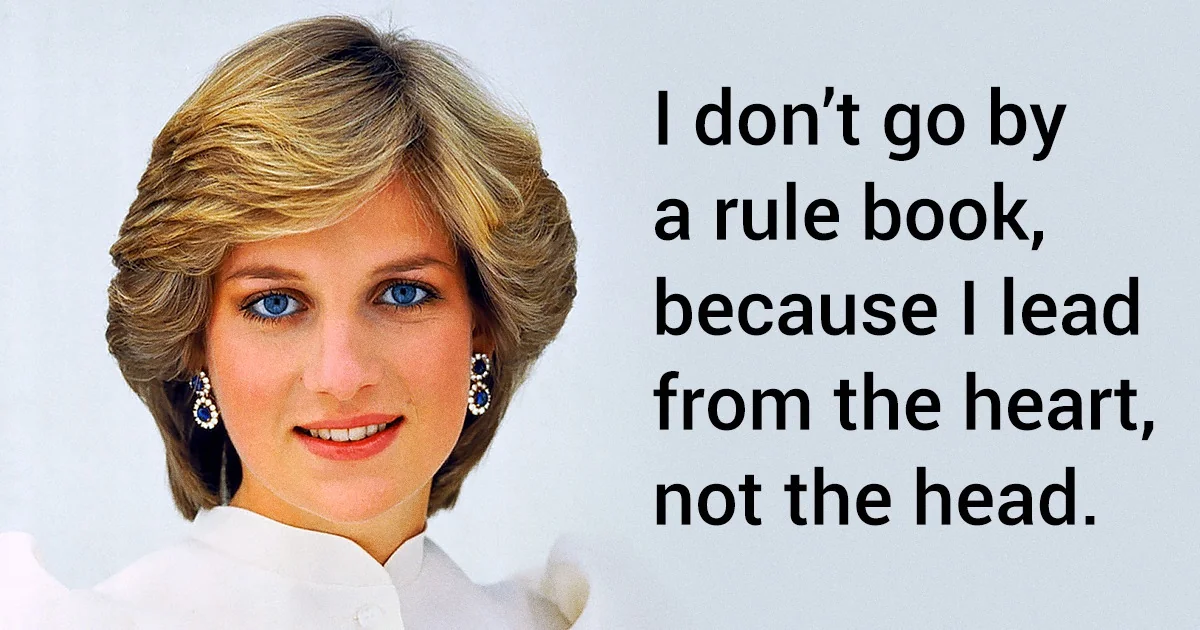
“I don’t go by the rule book; I lead from the heart, not the head.” She said this in the 1995 BBC Panorama interview while explaining her approach to duty and connection with ordinary people [1][12]. The line endures because it crystallizes Diana’s values in one sentence and mirrors her highly visible acts of compassion in hospitals and shelters.
“I think the biggest disease this world suffers from in this day and age is the disease of people feeling unloved.” In the same 1995 Panorama conversation, she argued that loneliness and stigma could be as destructive as physical illness [1][12]. The quote still resonates in mental health advocacy and community care initiatives across the world.
“HIV does not make people dangerous to know. You can shake their hand and give them a hug. Heaven knows they need it.” Diana’s remark is widely cited by HIV charities to mark her 1980s and 1990s visits and her public handshakes with patients at a time of fear and misunderstanding [2][5]. The message remains a model for confronting prejudice with knowledge and kindness.
Her approach to parenting shaped much of her public service. She wanted William and Harry to grow up understanding the world beyond palace walls and to meet people where they are.
“I want my boys to have an understanding of people’s emotions, their insecurities, people’s distress, and their hopes and dreams.” This line from the Panorama interview explains why she took them to shelters and hospitals, turning empathy into a practical education [1][12]. It remains one of the most quoted parenting statements associated with Diana because it is both specific and universal.
She often arranged informal visits with her children and prioritized simple, human moments over ceremony. While not tied to a single scripted quote, her recorded statements on empathy align tightly with the public record of her patronages and trips with William and Harry to experience life outside formal royal settings [7][8][9]. The result was a parenting ethos that influenced how many modern public figures involve their families in service.
Diana’s candor challenged long-standing norms about what royals should say or share. In doing so, she brought the public into her reality and reframed expectations of accountability and humanity in public roles.
“There were three of us in this marriage, so it was a bit crowded.” The sentence appears in the Panorama interview as she discussed the pressures on her marriage and its public fallout [1][12]. While intensely personal, the line became emblematic of her honesty and the cost of life under scrutiny.
“I’d like to be a queen of people’s hearts, in people’s hearts, but I don’t see myself being Queen of this country.” This remains one of her best-known lines from Panorama and captures why she was called the People’s Princess by the public [1][12]. The quote highlights the tension between official titles and a deeper, emotional mandate.
Through Panorama and subsequent speeches, Diana argued that transparency could strengthen public service. While not every reflective aside is a standalone quote, the verified lines above formed the backbone of a new, humane ideal of leadership that prized connection and care over distance and infallibility [1][12].
Diana’s 1997 work on landmines helped place the human cost of conflict at the center of global attention. Her statements often stressed neutrality in party politics and urgency in protecting civilians.
“I’m not a political figure. I am a humanitarian figure. I always have been and I always will be.” She said this while advocating for a global ban on anti-personnel landmines in 1997, emphasizing that her focus was on human suffering rather than partisan debate [3]. The line became a blueprint for public figures seeking to advance policy goals through humanitarian framing.
Her January 1997 trip with The HALO Trust brought survivors’ stories to the front pages and intensified momentum for what became the Ottawa Treaty later that year [4][11]. Though the treaty opened for signature months after her death, survivors and advocates credit her with accelerating awareness and political will by putting people, not geopolitics, first [4][11].
Diana’s quotes do not exist apart from her actions. The following milestones show how her statements were expressed through real-world commitments and influence.
Here is a concise list of widely documented lines, each taken from broadcast interviews or authoritative charity archives.
Use this mobile-friendly table to scan themes, years, and source anchors. It is especially helpful for students, journalists, and anyone fact-checking quotes at a glance.
| Quote (short) | Theme | Year and Source |
|---|---|---|
| “Lead from the heart…” | Kindness and Service | 1995, BBC Panorama [1][12] |
| “Biggest disease is feeling unloved” | Mental Health, Compassion | 1995, BBC Panorama [1][12] |
| “HIV does not make people dangerous…” | HIV Stigma, Public Health | Late 1980s–1990s, HIV advocacy quotes [2][5] |
| “Three of us in this marriage” | Media, Public Duty | 1995, BBC Panorama [1][12] |
| “Queen of people’s hearts” | Identity, Public Role | 1995, BBC Panorama [1][12] |
| “I’m a humanitarian figure” | Landmines, Advocacy | 1997, Landmine campaign remarks [3] |
| “I want my boys to understand…” | Motherhood, Parenting | 1995, BBC Panorama [1][12] |
Several facts strengthen the meaning of Diana’s words. First, AIDS patients were heavily stigmatized during the 1980s, so her ungloved handshakes and plain-spoken reassurance made headlines and shifted perceptions of safety and dignity [2][5]. Second, landmines were injuring and killing civilians long after wars ended, so her walks in Angola and her advocacy in 1997 helped focus public attention on a technical but urgent humanitarian issue [4][11]. Third, she paired her emotional intelligence with practical patronage work, which ensured her words were always tied to action that groups could build on, from youth homelessness to pediatric care [7][8][9].
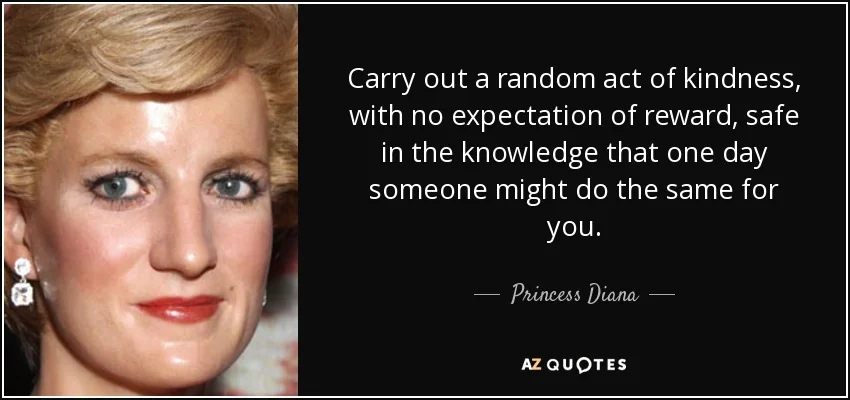
It is tempting to include every uplifting line associated with Diana, but not all are verifiable in primary sources. Phrases such as “Carry out a random act of kindness, with no expectation of reward” and “Only do what your heart tells you” circulate widely online. However, credible broadcast transcripts or organizational archives are often missing for these lines. When in doubt, check the 1995 BBC Panorama transcript coverage and major charity archives before sharing [1][2][12]. This article includes only quotes that are directly traceable to authoritative records or organizations.
Start by pairing each quote with an action. If you share “Lead from the heart,” set a simple weekly kindness goal, such as a supportive message to a colleague or a small donation to a relevant cause. If you foreground the HIV quote in a classroom or workplace briefing, include up-to-date facts about transmission and treatment from public health agencies and local advocacy groups. If you highlight the landmine statement in leadership training, add survivor testimony from reputable NGOs so the moral call has a human face and a measurable outcome [3][4][10][11].
For additional cultural context and how public storytelling shapes influence, consider reading about celebrity narratives and public messaging, including long-running ad campaigns and notable relationship arcs. You can explore these angles here: Who Is the Princess Cruise Commercial Singer Everyone Remembers Today? and Epic Hollywood Celebrity Relationships: Timelines, Quotes, Lessons, and FAQs.
Consider these data points and institutional histories that give weight to Diana’s language on compassion and justice.
Use three simple checks. First, look for a broadcast transcript, recorded speech, or official organizational archive. Second, confirm the date, place, and context in at least two reputable sources. Third, beware of quote lists without citations. The 1995 Panorama interview coverage and leading charity pages are the most reliable starting points for Diana’s most repeated lines [1][2][3][4][12].
“I don’t go by the rule book; I lead from the heart, not the head.” It summarizes her ethos of people-first service and is recorded in the 1995 Panorama interview coverage [1][12].
“HIV does not make people dangerous to know. You can shake their hand and give them a hug. Heaven knows they need it.” HIV charities and historians cite this line as pivotal in countering fear and misinformation [2][5].
“I’m not a political figure. I am a humanitarian figure. I always have been and I always will be.” She used this framing while urging action against landmines in 1997 [3].
“I’d like to be a queen of people’s hearts, in people’s hearts, but I don’t see myself being Queen of this country.” The statement emphasizes emotional mandate over constitutional status [1][12].
“There were three of us in this marriage, so it was a bit crowded.” It is one of the most cited lines from the 1995 interview and reflects her decision to speak candidly about private pain [1][12].
“I want my boys to have an understanding of people’s emotions, their insecurities, people’s distress, and their hopes and dreams.” The quote outlines a parenting philosophy centered on empathy [1][12].
No. Some viral lines lack primary sources. Before sharing, check reputable transcripts or leading charity archives that document her words and actions [1][2][12].
Start with major news outlets that published key quotes or transcripts in the context of the interview’s history and later probes, including The Guardian and The Independent [1][12].
Look at The HALO Trust for landmine advocacy, National AIDS Trust and the British Red Cross for HIV and humanitarian work, and long-time patronages like Centrepoint, the Royal Marsden, and Great Ormond Street Hospital [2][4][5][7][8][9].
Use short verified lines, pair each quote with a real-world example, and link to reputable sources in your slides or handouts for transparency [1][2][4][12].